We Sat Down With the 'You Look Hot' Founder to Talk All Things Small Businesses
From a Durham uni bedroom to a fully-fledged knitwear brand with a devoted following, Sophia Ponsonby of You Look Hot is proof that the best businesses start with a little chaos and a lot of heart.
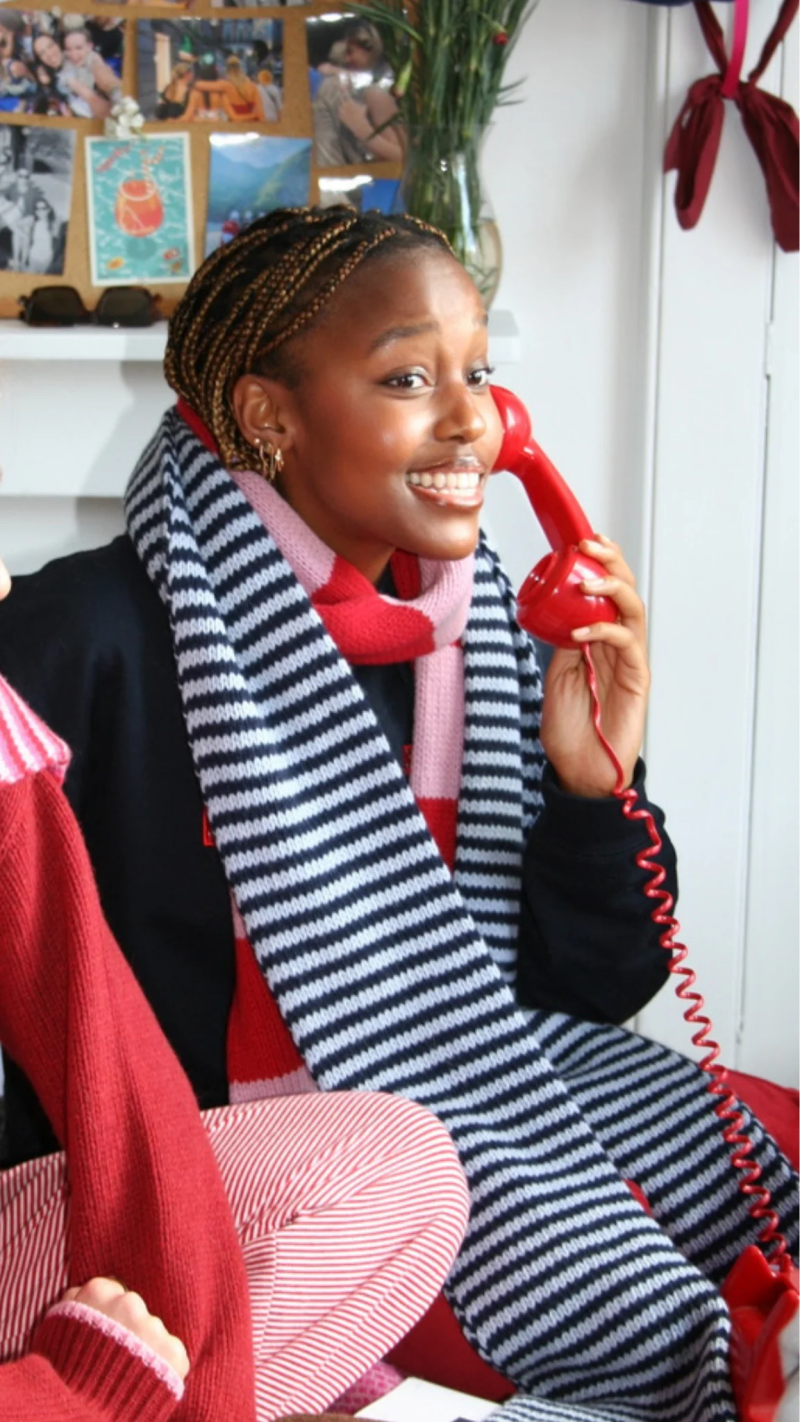
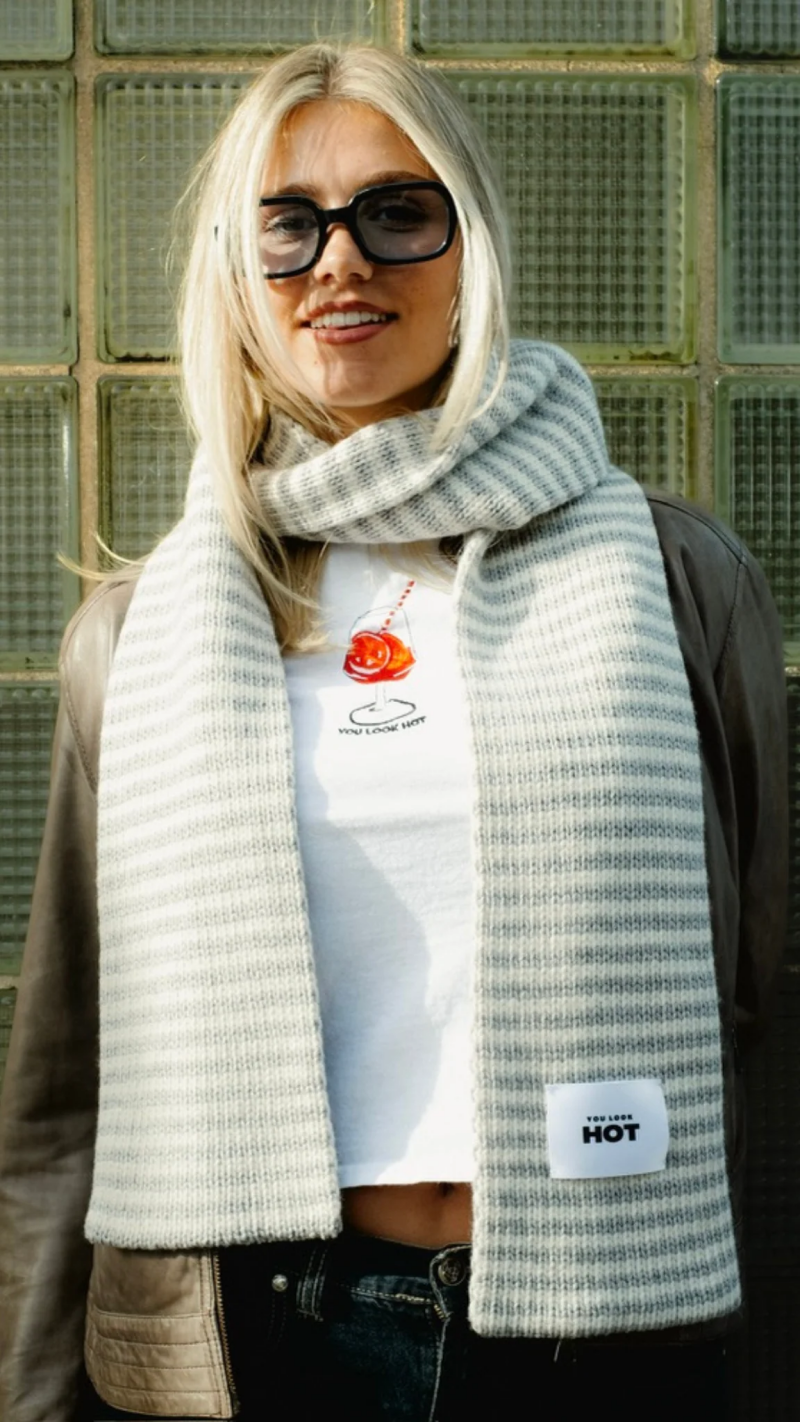
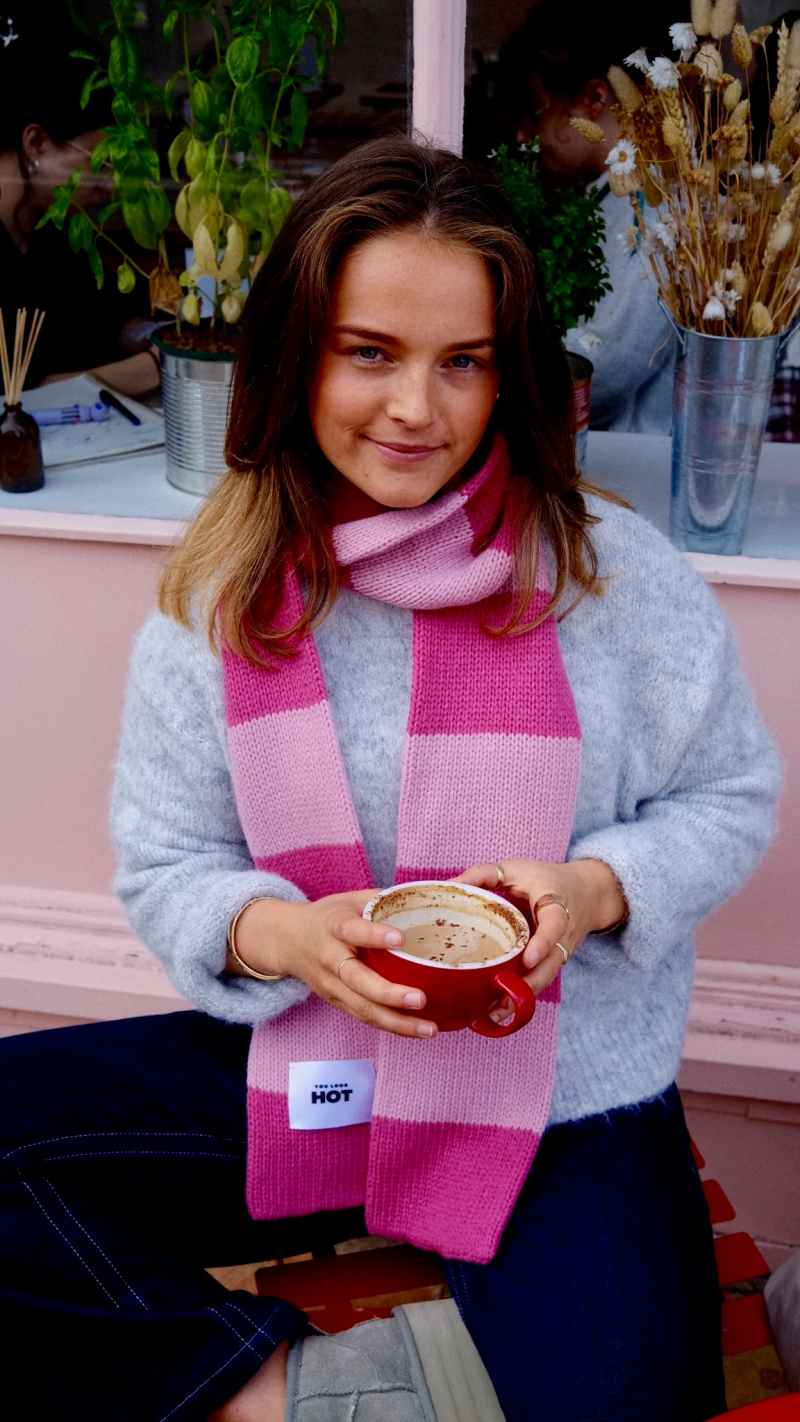
All images taken from the You Look Hot Website You Look Hot
Joining the call repping her signature stripes, Sophia Ponsonby was exactly how you might expect the founder of brand You Look Hot to look: relaxed, cheerful and completely at ease talking about her brand, sustainability, female founders and the chaos of running a small business. However, spend an hour with Sophia and you begin to understand that behind the chilled demeanour is someone who works hard, thinks deeply, and takes her craft - and her customers - very seriously.
The brand, known for its playful scarves and bold patterns, didn’t begin with a grand 5 year plan of a meticulously mapped out business strategy. Instead, Ponsonby laughs as she explains that it started in the most familiar place for many Durham students - her university bedroom.
“I honestly didn’t have some huge vision,” she admits. “It came from my uni bedroom in a moment where I thought there were minimal consequences if it didn’t work out. I just wanted to do something.”
For readers who don't know: You Look Hot is the knitwear brand that has quietly become one of the most beloved names in the UK small business space. Bold stripes, joyful colour palettes, exquisitely crafted scarves, gloves, hats and headbands — all made with genuine care about where they come from, how long they last, and who is wearing them. It is the kind of brand that feels as good to buy from as it does to wear.
A Durham Beginning
There is something especially inspiring and thrilling about a Durham alumna doing big things, and Sophia is exactly that. She studied Spanish and Italian at Durham, a choice that has since proved unexpectedly useful when navigating conversations with overseas manufacturers, and has fond memories of Ozzys, The Swan, and Mixology for a good cocktail.
It was in her second year at Durham that Sophia first set You Look Hot in motion, knitting from her university bedroom and figuring things out as she went. By the time her year abroad in Madrid came around, the brand was already real enough that walking away from it, even temporarily, wasn't an option. So she didn't. Instead, she hired a small team of knitters back in the UK to keep things running while she was away - a decision that, looking back, was the first real signal that this was more than a hobby.
Her degree opened more doors than she might have anticipated. The language skills helped smooth the path with suppliers in ways that a business degree not could have predicted, and her year abroad in Madrid shifted something deeper. Immersed in a city with an extraordinary sense of style and a culture of dressing with intention, she began to think differently: about expansion, what being a brand could mean, and the kind of world she might want to build around her work. "It was my year in Madrid that really made me think about where things could go," she says. "There is something about being surrounded by people who take how they dress seriously that makes you take it seriously too."
The business started in a moment where, as she puts it, "there were minimal consequences if it didn't work out." A wave of female-founded small businesses was rising around her, and she felt the pull of it. "I just wanted to do something," she says simply. "It was a distraction from uni. I had no idea where it would go." She taught herself as she went, managing everything herself to keep it lean and low-risk. Starting small, she reasoned, was smarter than overcomplicating things before she had even found her feet.
The distraction, it turns out, had legs. The core vibe of the brand has stayed consistent from those early days, but it has sharpened considerably with time, accumulating the focus and direction that simply wasn't there at the start. Which, when you think about it, is exactly how the best brands tend to work. They don't emerge fully formed. They grow into themselves.
Hot in Every Sense
I ask Sophia what "hot" means to her, and she grins. "When you wear knitwear, you are warm - so you literally look hot," she explains. "But it is also just fun to tell someone they look hot. A woman saying that to another woman- its empowering." It is a small and perfect distillation of the brand's ethos: playful, warm, and quietly feminist. The name works on multiple levels simultaneously.
She is thoughtful, too, about the responsibility that comes with a brand speaking directly to women, and particularly to younger women (which she notes make up a large portion of her audience). Body image is something she considers actively when putting campaigns together. Representing a mixture of body types is not a box-ticking exercise for Sophia but a genuine value. "It is important that they see themselves in whatever I am selling," she says. "I have a younger audience and I feel that responsibility. A mixture of body types is something I actively think about - it matters." When you are building a brand that is, at its heart, about making women feel good, you have to mean it in every direction.
The Art of Making Something That Lasts
“I think a lot about what I put out - yarn wise, product wise. Does it last? Will someone still wear it in 5 years?”
You Look Hot is not a fast-fashion brand, and this is something Sophia is emphatic about — even if she doesn't wave a particularly loud banner about it. Sustainability is woven into how she thinks about every decision, from the yarn she chooses to the manufacturer she visits. In the early days, the brand was entirely made to order: nothing got produced unless someone had already bought it, which meant nothing went to waste. That model is no longer possible at the scale You Look Hot now operates at, but the underlying commitment hasn't shifted - it has simply found new expression.
The focus now is on materials. She is deeply conscious of the yarn she uses, constantly trying to find the balance between quality that genuinely lasts and a price point that remains accessible to her customers. "It is such a hard line to walk with knitwear," she says, "because the good quality stuff is always more expensive. But I care deeply about making sure customers are getting the best product at the best price. I am willing to swallow some profit on that." She recently visited her manufacturer in Portugal - a small, family-run operation who hold all the relevant sustainability certifications - and came away energised. "Knowing where it is made and how it is made, and that the people making it share your values - that is really important to me," she says.
Each product takes four to six samples before she signs off on it. The signature scarves are particularly difficult to get right, requiring iteration after iteration before they meet her standard. She begrudgingly admits that It is painstaking work, but it shows in the finished product. Trends are, largely, not something she chases - by the time a small brand has moved a design all the way through the manufacturing process, the moment has often passed. "By the time things have gone to the manufacturer, the chances are a trend is already over," she says. "And honestly, I want people to still be wearing these pieces in five years. That is the whole point." Designing for longevity is simply more in keeping with the brand.
When I asked about inspiration, she said that like most fashion lovers, she trawls Pinterest to spark ideas; looking at colours and patterns that work cohesively and draw you in. She also admitted that the inspiration wasn’t always too hard to find, “With knitwear there is somewhat of a natural progression - from scarves to gloves, hoods, hats…”. Spring has her particularly excited right now. Bold patterns, polka dots, light blues.
On Thinking on Your Feet
Ask Sophia about challenges and she doesn't flinch. There have been a few, and they have been significant. The biggest problems, she says, have all been to do with manufacturing - which is perhaps unsurprising given how central that relationship is to everything she does.
The most recent disaster unfolded at the worst possible time. A manufacturer she had worked with for a while completley fell apart at the end of last year, right in the middle of Christmas sales - her biggest period. All the stock they sent was substandard, leaving her with little to actually sell during the crucial run-up to Christmas. "It was a long, drawn-out process," she says. "With so many iterations of colours and patterns, it is such a headache to unpick the right parts of an order, and this was all happening slap bang in the middle of our most important trading period." The profit that should have been made in those weeks simply evaporated.
And before that, there was an even worse saga. The previous May, she placed a smaller order with a new manufacturer for a summer line (she always orders less in summer, as knitwear is naturally a cooler-weather business). The manufacturer took the order, took the payment, and then went radio silent. Then bankrupt. The fabric she had sent to them arrived back on her doorstep a month later with a note saying the address didn't exist. The whole summer collection: gone. "I was worried I would have nothing to show for the season," she says. "It was the whole of summer products, just gone. A hard money loss."
But rather than spiral, she thought on her feet. She pivoted, produced a run of cool baby tees using her mums embroidery machine, that turned what could have been a write-off summer into something she sounds genuinely proud of, and made sure the fabric that came back would go to good use the following year. Nothing wasted. "I learnt from it," she says simply. This year's summer range is being made in the UK. Lesson absorbed, adapted, applied.
She tells all of this almost cheerfully. "Running a business is a really good exercise in problem solving under pressure," she says. "In not getting too stressed about it." – I laugh at this thinking we could all do with a bit of Sophia’s glass half full take on things.
A Room Full of Women
One of the most joyful threads running through our conversation is community. Sophia exists within a brilliant and tight-knit ecosystem of female-founded brands - Minka Dink, Moo Moda, Babble and Goose, Bijoux de Mimi - and she is genuinely, visibly enthusiastic about all of them. When I ask whether, given that they share a similar target customer, there is any competitive edge to these relationships, she almost looks surprised by the question.
"Everyone is doing such different things," she says. "And honestly, everything complements each other, it works together and flows well, but everyone has such a strongly differentiated brand personality." Millie, the founder of Moo Moda, is one of her best friends and a frequent collaborator - their recent joint pop-up was a highlight, full of light pink and blue tones, the kind of spring energy that makes you want to immediately rethink your wardrobe.
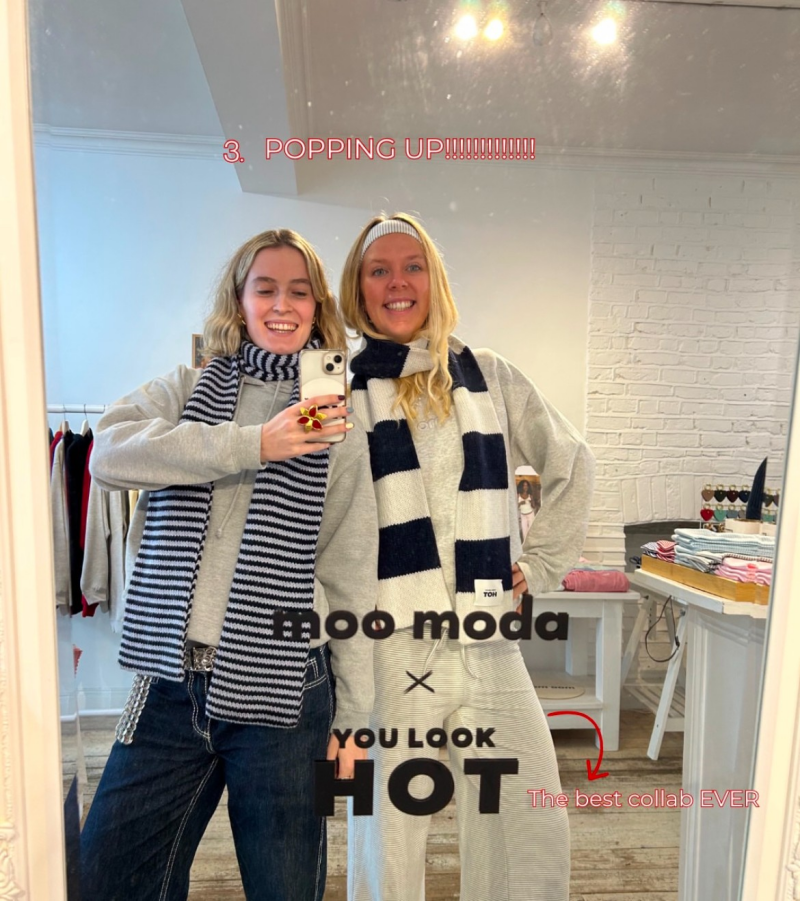
IG: @_youlookhot
Even if two brands in the group were technically making the same category of product, Sophia is convinced there would be no confusion. "It is obviously the brand it belongs to," she says. "Everyone has their own thing. It is a lovely network to be part of."
Her role models sit within this world too. Minnie and Amelia, who run Minka and Bijoux respectively, are named with particular admiration — "they are such inspirations, especially for where I am right now with the business versus where I would love to be," she says “they show me what I can achieve”.
Grace Beverly, founder of Tala, comes up with equal enthusiasm. What Sophia admires most is Beverly's willingness to share knowledge rather than hoard it. "She doesn't gatekeep success," Sophia says. "She offers so much guidance about how to run a business, how she has done it. She teaches people how to do it." You get the sense that this is a quality Sophia values deeply - and one she intends to embody herself as the brand grows.
As for feeling underestimated as a young female founder? She almost laughs the question off. She works with mostly women: her manufacturers are a mother and daughter team, the head of production is a woman and the small-business world she operates within is, by her reckoning, about 95% female-oriented. "I am often in a room full of other women," she says. "That is just the world I operate in." It sounds like the only kind of room she has ever really wanted to be in.
Still A Work In Progress - in the Best Way
I asked Sophia when she first felt like things were really working, her answer is candid. "Honestly, only in the last six months, since I started doing it full time," she says. There were earlier signals, a feeling in fourth year of "this is going well, this could work" that motivated her to keep pushing, but the real shift came more recently, after Christmas, when she finally did a series of pop-ups and events she had long been thinking about but hadn't quite got around to.
"It was a really cool opportunity to see the customer base growing physically in front of me," she says. "Mostly things are done online and it is harder to realise the impact you are having. But at the pop-up I could see it … real people, discovering the brand, right there." Standing in a room, watching that happen in real time, was something a sales dashboard simply cannot replicate.
"I still don't think I have had the 'I made it' moment," she says. "It is a work in progress. But the past six months it has felt like it is working." There is something quietly inspiring about that. Not the triumphant founder narrative tied up neatly with a bow, but the honest one. The one where it is still being built, still becoming, and you can absolutely feel it still genuinely exciting.
From a Durham bedroom to Portugal and back again — via a ghosted manufacturer, a Christmas catastrophe, and a summer she turned around entirely on her own terms — Sophia Ponsonby is building something genuinely special. Slowly, carefully, beautifully. One stripe at a time.
Find out more and see the new swimwear collection by clicking this link! You Look Hot
Create Your Own Website With Webador